China’s AI ascent: DeepSeek, Qwen and the rise of Kimi
China’s AI industry is no longer defined by one DeepSeek surprise. Alibaba’s Qwen has scale, and Moonshot AI’s Kimi now has the momentum.
Capital Park · Singapore
When DeepSeek released its R1 reasoning model in early 2025, Silicon Valley didn’t quite know what to make of it. The surprise wasn’t that China could build a capable AI model. The surprise was how quickly a relatively small Chinese lab had entered a race that was supposed to belong to a handful of heavily funded American companies.
For a while, it was tempting to treat DeepSeek as a one-off. That explanation is getting harder to maintain. Alibaba’s Qwen has grown into one of the world’s broadest open-model families, and Moonshot AI’s Kimi is now drawing attention with a model built for long documents, coding, visual analysis and complex knowledge work. China’s AI sector is starting to look less like a collection of isolated breakthroughs and more like an ecosystem.
China is playing a different game
Chinese developers are working with real disadvantages. U.S. export controls limit access to the most advanced chips, local computing capacity is expensive, and the biggest American labs still have far more capital. But those limits have shaped a different style of competition. Chinese teams have placed a premium on efficiency, fast release cycles and models that developers can download and run themselves.
That last point matters. Most leading American models are products you rent through an app or an API. Many Chinese models are released with downloadable weights. A company can adapt them, host them on its own servers and keep sensitive information inside its own network. Open-weight doesn’t mean free to operate, and it doesn’t tell you everything about how a model was trained. It does give developers more control.
DeepSeek was the wake-up call
DeepSeek changed the way the rest of the world talked about Chinese AI. R1 delivered strong reasoning performance and arrived with a much leaner cost story than investors had come to expect from the industry. Almost overnight, the question shifted from “Can China catch up?” to “How much money and computing power does a frontier model really need?”
The company kept releasing models after the initial rush of attention. Its public model record now runs through V3.2 and DeepSeek-V4, released in April 2026. Not every model has produced the same market reaction, but the steady output matters. DeepSeek proved that tight hardware constraints can push a research team toward better engineering rather than simply stop it.
Qwen brings Alibaba’s scale
If DeepSeek is the scrappy research story, Qwen is the industrial one. Built by Alibaba Cloud, Qwen isn’t a single flagship chatbot. It’s a large family of models covering different sizes and specialties, including coding, vision, reasoning and tool use. Developers can choose a smaller model for a focused task or a larger one for more demanding work.
Alibaba also has something an independent lab can’t easily reproduce: distribution. Qwen can move through Alibaba’s cloud business, enterprise software and consumer products. In April 2026, Alibaba introduced Qwen3.6-Plus with an emphasis on agentic coding, multimodal understanding and systems that can carry out work instead of simply answering questions. That combination of open development and commercial reach makes Qwen an important bridge between China’s research community and its enormous digital economy.
Then came Kimi
Moonshot AI is the newcomer in this group. Computer scientist Yang Zhilin and his colleagues founded the Beijing company in early 2023. Its Kimi assistant first won users by handling long documents and unusually large amounts of context. The company’s name reflected the size of its ambition; Kimi was named after Yang’s English name.
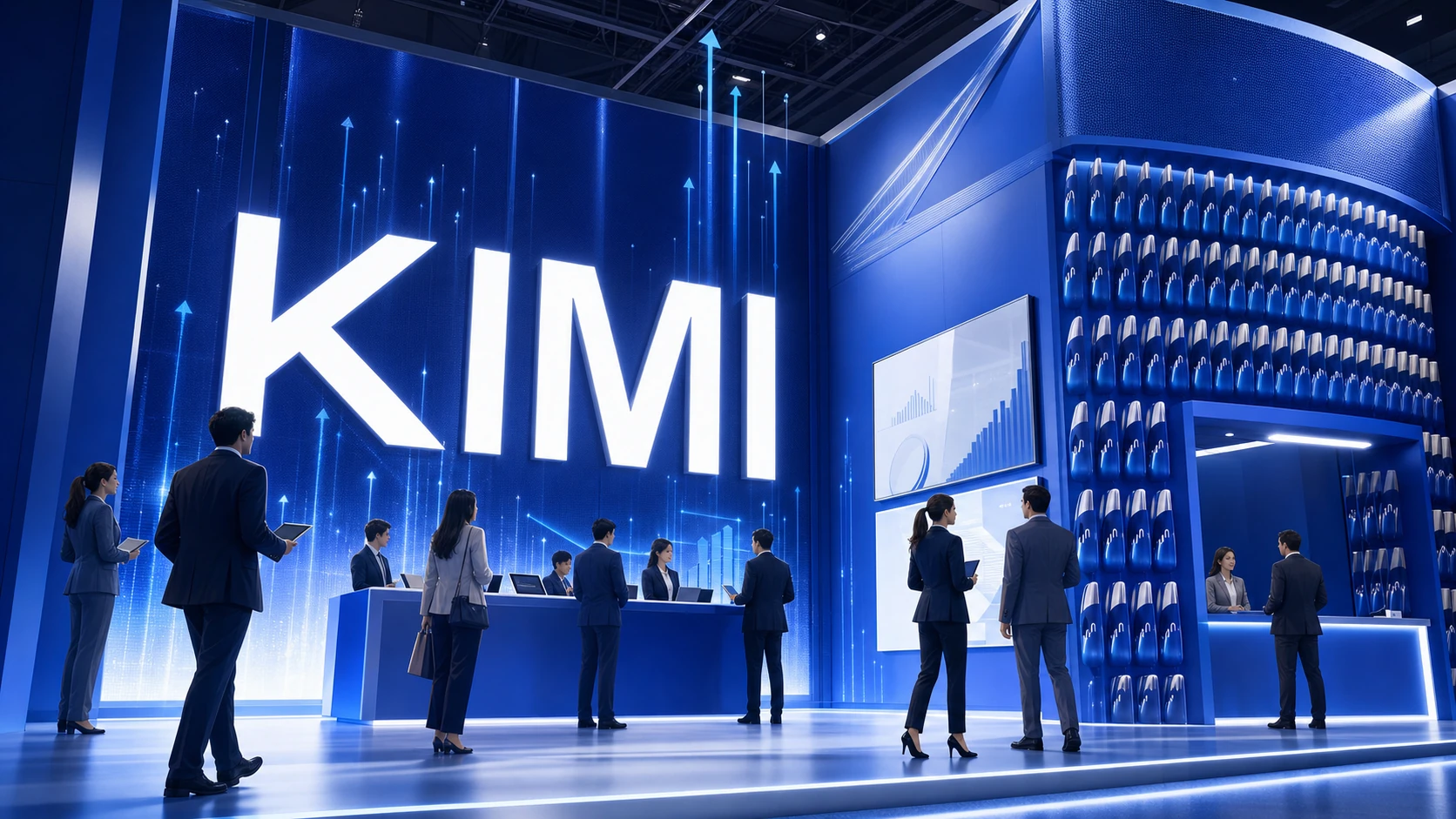
Kimi K3, released in July 2026, brought Moonshot into the global spotlight. The company describes it as a 2.8-trillion-parameter model with native visual understanding and a one-million-token context window. It was designed for software engineering, research, spreadsheets and other jobs that require a model to keep track of a lot of information at once. Moonshot also released K3 as an open-weight model, making it possible for sophisticated users to deploy it outside the company’s own service.
Demand arrived fast. Moonshot paused new subscriptions within days because its computing capacity couldn’t keep up. Its own benchmark results placed K3 near leading U.S. systems on several coding and knowledge-work tests. Company benchmarks should always be read carefully, and a model this large won’t be practical for everyone to run. Even so, the response showed that developers were willing to take Kimi seriously before the debate over rankings had settled.
The important thing about Kimi isn’t one benchmark score. It’s that a three-year-old Chinese startup has produced another model the global AI industry can’t ignore.
Why Kimi stands out
Kimi arrived at the right moment. The industry is moving beyond chatbots and toward agents that can search a codebase, compare hundreds of documents, interpret images and complete a sequence of tasks. Moonshot has been building in that direction from the start. A million-token context window doesn’t guarantee good judgment, but it can be genuinely useful when the source material is spread across files, reports and databases.
Kimi also benefits from the way open models travel. Developers can test the model, build tools around it and bring it to cloud platforms that Moonshot could never reach on its own. That gives a young company influence far beyond its sales team or marketing budget. The hard part will be turning that attention into a durable business while paying for the enormous amount of computing power K3 requires.
There’s a broader point here. DeepSeek could be dismissed as an extraordinary optimization story. Qwen could be explained by Alibaba’s size. Kimi is a different kind of evidence. It suggests China now has enough talent, funding and technical depth to produce competitive models through several different kinds of organizations.
Why Silicon Valley is rattled
None of this means American AI companies have suddenly lost their lead. U.S. labs still perform better on many difficult, real-world tasks. They have strong consumer brands, deep enterprise relationships, abundant capital and the best access to advanced chips. What has changed is the amount of room they have to charge a premium without explaining why.
If an open Chinese model is good enough for routine coding, research or document work, developers can send only the hardest problems to a more expensive American system. That puts pressure on API prices and profit margins. It may also push U.S. companies to offer more open models of their own, improve their smaller products or bundle AI more aggressively into software people already use.
The rise of DeepSeek and Kimi will also sharpen questions about spending. American technology companies are committing hundreds of billions of dollars to data centers and chips. China’s progress doesn’t prove that computing power is unimportant — Kimi K3 is a huge model — but it does make investors ask whether each new dollar of infrastructure is buying a lasting advantage or simply funding the next round of competition.
Then there is Washington. U.S. officials and American AI companies have accused several Chinese labs, including Moonshot, of learning from the outputs of proprietary models through a process known as distillation. Moonshot has denied the allegation, and some analysts have questioned whether the timing supports it. The dispute could lead to tighter export controls, sanctions or restrictions on Chinese models. Open weights, however, are difficult to contain once they have been released and copied around the world.
The likely result is a broader and more complicated AI market. Some governments and companies will choose American systems because of security, support or political alignment. Others will prefer Chinese open-weight models they can customize and host locally. Many will use both. That competition can lower prices, widen access and speed up useful innovation in fields from software development to scientific research. It can also split the technology stack along geopolitical lines.
DeepSeek made China’s progress impossible to overlook. Qwen showed how broad the country’s model ecosystem had become. Kimi adds something new: momentum. For American AI companies, that means the race is no longer just about who can build the smartest model. It’s also about who can make intelligence affordable, open and useful to the rest of the world.
Sources and further reading: CNN on Kimi K3 and the U.S. response, Moonshot AI model documentation, Moonshot AI company overview, DeepSeek model transparency center, Alibaba Cloud on Qwen3.6-Plus, and Nature’s independent perspective on Kimi K3. Model specifications and benchmark claims are attributed to their publishers unless otherwise stated.