Singapore Property Market: HDB prices fall for three straight quarters: first such run since 2019
After the post-Covid surge, Singapore's public housing is cooling. Scarce freehold land tells a different investment story in Singapore.

Capital Park · Singapore
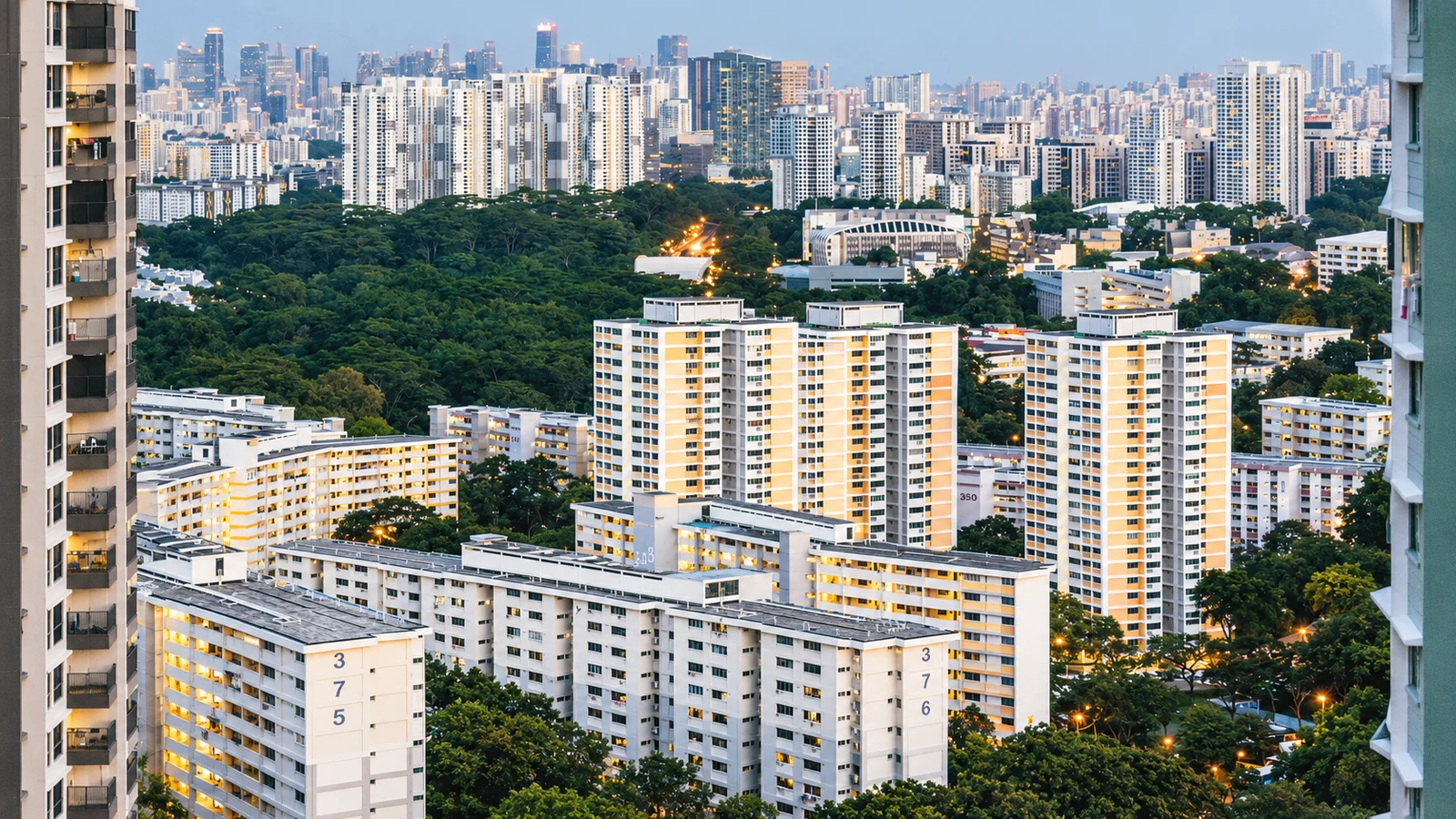
For years, Singapore’s HDB resale market appeared to move in one direction: up. Now, the latest flash estimate points to three consecutive quarters of falling prices, the first such run since 2019. The declines are small. The change in direction is what makes them significant.
HDB’s resale price index slipped 0.1% in Q1 2026 and 0.3% in Q2. The Q3 flash estimate shows a further 0.2% decline to 202.4. That leaves the index approximately 0.6% below end-2025, calculated from the published index levels. The Q3 figure remains preliminary and may be revised. HDB’s official index table records the three-quarter sequence.
Quarter-on-quarter changes. Source: HDB. Research as at 4 October 2026.
The last comparable run ended seven years ago
The historical comparison deserves precision. HDB’s published series shows four consecutive quarterly declines from Q3 2018 through Q2 2019: −0.1%, −0.2%, −0.3% and −0.2%. Prices then rose in Q3 2019. The current sequence is therefore the first run of at least three quarterly declines since 2019, rather than the first time prices have ever fallen three times. HDB’s historical series establishes that comparison.
Seven years is a long interval in a housing market. It spans the pandemic, construction disruptions and a powerful recovery in resale values. Against that backdrop, even a modest reversal challenges the assumption that the post-Covid pace could continue indefinitely.
How the post-Covid surge took hold
The pandemic disrupted the delivery of new homes just as households still needed somewhere to live. Construction delays made waiting for a Build-To-Order flat less attractive to buyers who needed a home sooner. Completed resale flats offered certainty, and that urgency helped support competition for available units.
This was a real supply disruption. In early 2024, HDB reported that it had delivered about 80% of pandemic-delayed projects and was still working through the remainder. Its January 2025 completion announcement subsequently marked the end of the backlog. The earlier construction update documents the recovery in delivery.
The scale of the price rise matters. The index stood at 131.5 in Q4 2019 and 203.6 in Q4 2025, an increase of approximately 55% over six years, calculated using HDB’s historical index and resale statistics. A decline of around 0.6% this year has unwound only a small fraction of that gain. This is a cooling market, not evidence of a broad collapse.
Supply is catching up, and buyers have more choice
As the construction backlog clears and new flats become available, the urgency that characterised the pandemic market can ease. Flats reaching their minimum occupation period also add potential resale supply, although eligibility to sell does not mean every owner will list.
In its Q3 commentary, ERA points to roughly 13,480 flats reaching that milestone in 2026, alongside substantial BTO supply, as factors restraining price increases. It also reports that resale transactions rose during Q3. That combination suggests buyers are still active, while sellers face greater competition. ERA’s market assessment supports this interpretation.
Our reading is that supply is catching up with demand more effectively. The price index alone cannot prove that the entire housing shortage has disappeared, or that every town and flat type is equally well supplied. But more alternatives can reduce the premium buyers are willing to pay for immediate availability.
Cost-of-living pressures reinforce caution
Affordability also matters. Singapore’s consumer price index was 2.3% higher year-on-year in August 2026, according to SingStat’s latest release. Higher everyday expenses can leave households less comfortable stretching their budgets for a large mortgage.
ERA separately highlights employment uncertainty and buyer caution. Together, these pressures offer a plausible explanation for more disciplined bidding. They should be understood as contributing factors, rather than a statistical demonstration that inflation caused the quarterly falls.
HDB’s purpose is housing, not a speculative investment strategy
The investment lesson begins with the purpose of the asset. HDB is Singapore’s public housing system, built around resident home ownership and affordability. New flats receive subsidies; resale flats trade at negotiated market prices, with grants available to eligible buyers. Those are different purchase arrangements within the same public housing framework.
Eligibility rules, occupation requirements and the remaining lease shape what owners can do with a flat. Under the Standard, Plus and Prime framework, the minimum occupation period is five years for Standard flats and ten years for Plus and Prime flats. HDB’s stated policy intent places owner occupation at the centre.
A home can build household wealth without being the right vehicle for a property investment strategy.
HDB ownership has created substantial value for many households. But our preference for investing proprietary capital is to own scarce, enduring assets, rather than build a thesis around continued price escalation in a public housing system whose mandate includes affordability.
Why freehold landed property follows a different logic in Singapore
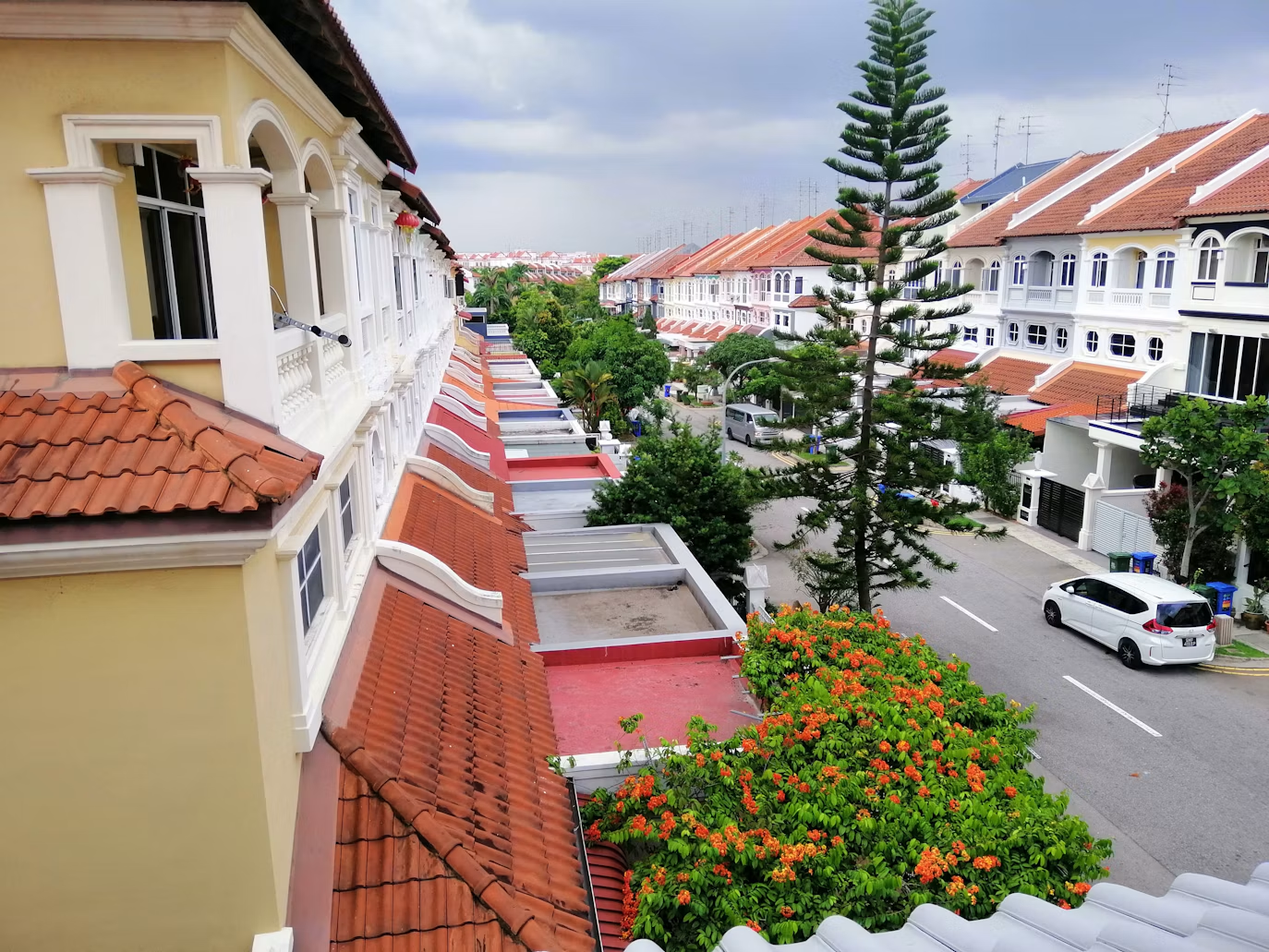
That preference leads us towards carefully selected freehold landed homes, including Good Class Bungalows, and suitable commercial properties such as shophouses. Their appeal rests on land, location, permitted use and the difficulty of reproducing an equivalent asset.
Singapore can add housing units through taller buildings. Replicating a low-density residential plot in an established neighbourhood is harder. URA’s landed housing controls illustrate the constraints: Good Class Bungalows generally require a minimum plot size of 1,400 square metres and have strict coverage and setback rules. New landed homes can still be built through redevelopment and subdivision where permitted; scarcity does not mean construction has stopped.
Conserved shophouses offer another form of scarcity: established locations and a historic building form protected by conservation rules. URA’s conservation guidance explains those constraints. Commercial income, tenant quality, permitted use and tenure still determine investment quality. A shophouse is not automatically freehold, and its commercial or mixed-use status must be checked.
A softer HDB index does not dictate landed prices
The latest data already show the distinction. While HDB’s Q3 flash estimate fell 0.2%, URA’s landed residential price index rose 2.8%; non-landed private residential prices rose 0.9%. Both private-market figures are flash estimates. The URA release demonstrates that Singapore’s housing segments can move in different directions within the same quarter.
Landed property responds to a different mix of buyer wealth, individual plot characteristics and limited substitutable supply. That can support resilience when mass-market housing cools. It does not remove exposure to financing costs, economic shocks, taxation or illiquidity, and the broad landed index does not measure freehold homes or GCBs alone. Foreign buyers also face approval requirements for landed residential property.
Our conviction remains clear: for long-term property investment, carefully bought scarce freehold land and high-quality commercial assets offer a more compelling foundation than extrapolating the HDB boom. Landed property has its own economics, and a decline in HDB or condominium prices should not automatically be read as a decline in landed values. Scarcity supports the case for resilience; disciplined asset selection and price still decide the outcome.
Sources and methodology. Links above lead to the underlying official data, housing and planning policies, and ERA’s named market commentary. Historical streaks and cumulative changes are Capital Park calculations using published HDB index levels. Q3 2026 HDB and URA figures are flash estimates. Research checked on 4 October 2026.